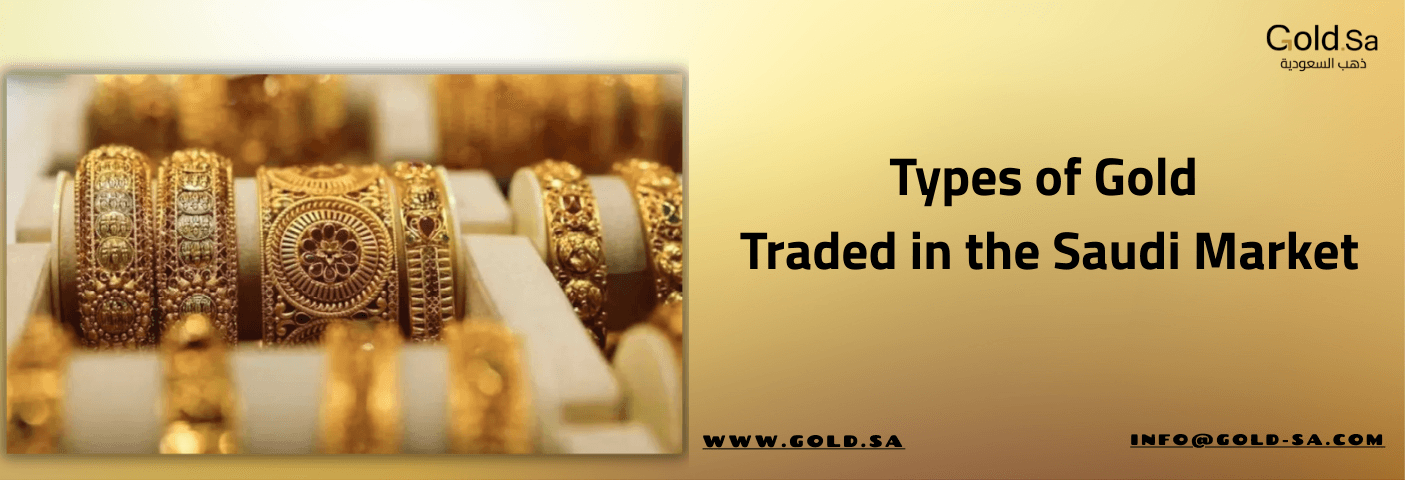
Types of Gold Traded in the Saudi Market: Discover the Best Options to Match Your Taste and Investment
Gold holds a distinguished position in Saudi culture and economy. It is used for adornment, gifts, and investment, which makes it essential for buyers to understand the different types of gold and their distinctions to choose the right piece for the desired purpose. The forms of gold traded in the Saudi market range from traditional jewelry to bullion bars, coins, and even modern digital gold investments.
In this article, we will explore these types in detail, along with practical tips for purchasing, guidance on distinguishing between genuine and counterfeit gold, and the fastest ways to track current gold prices in Saudi Arabia.
Types of Gold Traded in the Saudi Market
Gold traded in the Saudi market varies mainly by usage, color, and karat, giving buyers multiple options that suit different tastes and needs.
It is offered in the form of jewelry for adornment, gold bullion for investment, tradable gold coins, and even digital investments linked to the metal’s price. Its colors range from traditional yellow to modern white and warm rose, passing through classic green and calm gray, all the way to unique black.
As for karat, options include 24-karat for pure investment, 22-karat for luxury jewelry, 21-karat for traditional pieces, and 18-karat for fine designs.
Now, let us review these types in more detail to give you a clear picture that helps you make the right decision according to your purpose for buying gold.
Types of Gold by Usage: Your Guide to Choosing the Perfect Piece for Every Occasion
Gold traded in the Saudi market is divided by usage into four main forms: jewelry for adornment, investment bullion, gold coins, and digital investments. Each type serves a different purpose depending on the buyer’s needs, whether personal adornment, value preservation, flexible trading, or portfolio diversification.
Jewelry is the most common form, used for adornment and gifts, often crafted from 18-karat gold to 22-karat gold, depending on taste and durability. Bullion bars are the preferred choice for those seeking direct investment in raw gold, available in multiple weights, distinguished by high purity, and with almost no manufacturing cost.
Gold coins are used as a means of saving and trading, often carrying official stamps and standardized weights, making them easy to sell or keep as tangible assets. In contrast, digital investments have emerged as a modern option, allowing users to own gold electronically through ETFs or cryptocurrencies backed by real gold.
Now, we will review each of these types in detail, highlighting their characteristics and key advantages in the Saudi market.
1- Jewelry (Adornment): The most common form of gold in Saudi Arabia, usually crafted from 21–22 karat for flexibility and traditional appearance, or 18 karat for modern pieces adorned with gemstones. This type is highly popular for family occasions and gifts.
2- Bullion (Investment and Savings): Pure gold bars (24 karat, ≈99.9% purity) available in weights from 1 gram up to 1 kilogram, sold with almost no manufacturing cost, making them the ideal choice for long-term value preservation according to World Gold Council recommendations.
3- Gold Coins: Standard coins such as the Saudi Gold Sovereign, British Sovereign, and Krugerrand, issued by official authorities and stamped with high purity, making them easy to trade and sell at any time.
4- Digital Investments: Modern financial tools linking digital units to actual stored gold, including gold-backed ETFs and cryptocurrencies tied to the metal’s price. These are suitable for investors seeking online portfolio diversification.
Types of Gold by Color: Luxurious Shades Combining Beauty and Distinction
Gold in the Saudi market comes in six main colors, depending on the metals added: yellow, white, rose, green, gray, and black.
Yellow gold retains its natural color and reflects high purity, while mixing gold with nickel or palladium gives it the elegant white tone suitable for contemporary designs.
Copper adds a romantic warmth to rose gold, while silver gives it a soft, classic green shade. Gray gold appears when palladium or iron is added, giving a calm, modern look. Black gold is bold and artistic, achieved through oxidation or specialized plating, and used in limited pieces and advanced techniques.
Now, let us detail each of these gold colors in the following list:
1- Yellow Gold: The most widespread, naturally shiny and attractive, indicating higher purity when the yellow tone is stronger (stamped with high karat marks). It is used in traditional jewelry that is both light and durable.
2- White Gold: Made by mixing gold with white metals such as nickel, palladium, or silver, resulting in a shiny silver-like color. Elegant and popular in modern designs (brides often prefer it with diamonds), usually chosen in 18 or 14 karat.
3- Rose Gold (Red Gold): Produced by adding copper, giving it a warm tone leaning toward pink or red. Increasingly popular in luxury jewelry thanks to its romantic color.
4- Green Gold: A relatively old type made by mixing gold with silver, producing a light green shade with high quality and a classic touch. It was used in ancient jewelry among some cultures (the Persian Empire and certain Roman traditions).
5- Gray Gold: Gains its light gray tone from high iron content in the alloy or by adding palladium or silver. Distinguished by simple elegance, durable, and suitable for calm, refined designs (such as men’s engagement rings with fine engravings or modern minimalist necklaces).
Types of Gold by Karat: Your Guide to Choosing the Right Purity for Every Purpose
Gold in the Saudi market differs by purity level, classified into four main karats: 24, 22, 21, and 18. Each reflects a different percentage of pure gold and is used for specific purposes depending on the priority between purity, durability, and ease of shaping.
24-karat is preferred for investment, 22-karat for luxury jewelry, 21-karat for daily use and savings, while 18-karat suits artistic designs and gemstones.
Now, let us review these karats in detail and explain what makes each unique and how it is used:
24 Karat gold (99.9% Pure Gold): The purest and most expensive type of bullion, best for investment as its value remains almost stable long-term. Known as “999 gold,” it contains almost no other metals, often sold without or with minimal manufacturing cost.
22 Karat gold (91.6% Pure Gold): Contains a high percentage of gold but is slightly stronger than 24. Many luxury gold ornaments in Saudi Arabia are made from this karat, offering high purity, rich yellow shine, and sufficient durability.
21 Karat gold (87.5% Purity): Very common in the Gulf due to its balance between purity and strength. Used in wedding rings, commemorative bullion (such as dinars and gold sovereigns), and traditional jewelry. It is an ideal choice for gifts and savings as it resists wear.
18 Karat gold (75% Gold): A strong karat mixed with 25% other metals, giving it a deep yellow tone. Popular among women for its ease of shaping and compatibility with gemstones. Durable and more affordable than higher karats (24, 22, 21), making it common in modern designs and artistic pieces.
What is the Best Type of Gold to Buy in Saudi Arabia?
The best type of gold for investment and purchase in Saudi Arabia depends primarily on the purpose of buying. For investment and savings, 24-karat gold in the form of bullion bars or coins is preferred due to its high purity and ease of liquidity. For adornment and gifts, 21-karat and 18-karat gold are the most common because they balance durability with aesthetic appeal.
1- For long-term investment: Bullion bars or gold coins in 24-karat (or 22-karat) are the ideal choice, as they are free from manufacturing costs and maintain their value upon resale.
According to the report “Gold as a Strategic Asset: 2025 Edition,” experts confirm that “gold plays a key role as a long-term investment and safe haven during periods of economic uncertainty.”
2- For adornment and gifts: 21-karat gold is preferred for its bright shine and durability, while 18-karat is favored for modern designs decorated with gemstones.
3- For marriage: Complete sets are often purchased in 21 or 22-karat gold, sometimes accompanied by bullion bars or sovereign coins as symbolic family gifts.
4- For trading or quick profit: Small bullion bars or well-known gold coins are recommended to facilitate resale without manufacturing losses or complicated negotiations.
5 Golden Tips to Ensure Smart and Safe Gold Buying in the Saudi Market
When buying gold in the Saudi market, always start by defining your purpose, whether it is long-term investment or a piece for adornment. Then, make sure the karat and weight match official specifications, review gold prices locally and globally, and purchase only from reputable sellers while obtaining an official invoice and warranty to secure your rights. Here are the top 5 tips for investing in gold:
1- Check the making charges (manufacturing cost):
Ask how the making charges are calculated—whether added per gram or as a fixed percentage of the piece’s price. Understanding this in advance helps you avoid paying unjustified extra amounts.
2- Compare prices across shops:
Do not limit yourself to one jeweler. Visit 3–4 shops to understand the price range (gold + making charges). This comparison protects you from paying above the prevailing market average.
3- Request an official stamped invoice:
Ensure the invoice includes the gold karat, total, and net weight, and any making charges. The invoice acts as a legal document that safeguards your rights and proves the credibility of the seller.
4- Verify net weight and karat:
Compare the total and net weight written or stamped on the piece to confirm its purity. Also, check for the correct karat hallmark (such as “24K” or “21K”) so you don’t end up paying for other metals.
5- Inspect warranty and guarantee (if available):
Ask for a warranty card or guarantee certificate, and clarify who is responsible for compensation in case of defects. Warranties usually apply to jewelry and gemstones, but not to pure bullion bars.
By following these tips, you will buy gold of high quality with full confidence, avoiding surprises and unnecessary costs.
Don’t Fall into the Trap: Smart Ways to Detect Fake Gold Easily
To determine whether gold is genuine or counterfeit, you can rely on several simple home methods, such as the water test to check density, the magnet test to confirm non-attraction, the scratch test to observe the golden streak, and the acid or vinegar test to ensure pure gold does not react.
When verifying authenticity, the first sign is the hallmark stamp showing the karat (such as “18K” or “24K”), though it can sometimes be forged. Pure gold is also known for not being attracted to magnets, unlike mixed alloys that respond to them.
Purity can also be estimated by immersing the gold piece in water and measuring the displaced volume to confirm that its density is close to 19.3 g/cm³; any deviation indicates impurities.
Additionally, genuine gold maintains its color when touched with a drop of nitric acid or concentrated vinegar, while fake gold develops dark spots. For high accuracy without damaging the piece, specialized devices such as X-ray fluorescence (XRF) analysis or permeability meters are used to determine the percentage of gold directly and added metals.
The differences between gold testing methods can be summarized in the following table:
Test Method | Principle | Expected Result for Genuine Gold |
Hallmark (Stamp) | Check for karat stamp (e.g., 18K, 24K) | Genuine gold is clearly stamped, indicating purity |
Magnet | Test attraction to a magnet | Pure gold is not attracted to magnets |
Density | Measure density by weighing in water | Pure gold has a density of ~19.3 g/cm³ |
Acid (Nitric) | Reaction with nitric acid | Genuine gold does not react or change color |
Device (XRF) | Metal reading via X-ray or electronic scan | Accurately identifies gold percentage and other metals without scratching the piece |
By combining these tests (for example: hallmark + magnet + acid), buyers can reliably distinguish genuine gold from counterfeit.
How to Know Gold Prices in Saudi Arabia
To know gold prices in Saudi Arabia accurately, it is recommended to rely on specialized and trusted sources instead of random estimates. The best option is Gold.sa, which serves as a precise reference providing real-time data updated directly from the global market, along with local prices for each karat in Saudi Riyals and US Dollars.
You can also track prices through financial apps or check directly with gold shops to know the displayed price in your area. However, Gold.sa remains the smartest and most comprehensive choice thanks to its advanced features that help you make informed buying or investment decisions, including:
1- Real-time updated prices: Displaying the price of each karat in Saudi Riyals and US Dollars, updated moment by moment according to the global market.
2- Interactive charts: Allowing analysis of price movements across daily, weekly, monthly, and yearly periods.
3- Comprehensive historical record of gold prices: Helping you review gold’s past performance and forecast trends.
4- Smart calculator: Accurately calculates the value of gold by simply entering weight and karat, using the latest updated prices.
Gold prices today – Saturday, June 28, 2025, according to Gold.sa:
Karat | Price (SAR/Gram) |
24 | 394.79 |
22 | 361.89 |
21 | 345.44 |
18 | 296.09 |
Note: These prices change in real time according to the global market and exchange rates.
Ready to buy or track daily prices?
Head now to Gold.sa, follow live prices, use the smart calculator, or monitor chart movements carefully to choose the best time to buy.
Your golden decision begins with knowing the correct price.
In the diverse Saudi gold market, having a precise understanding of its types and uses is vital for any buyer or investor. Pure gold is often the most expensive, while choosing the right karat, color, and design gives you both value and the desired appearance.
We always recommend ensuring the piece is free from fraud through the tests mentioned above, and following practical tips (such as hallmark, invoice, and making charges) to guarantee a fair deal.
Finally, remember that monitoring daily gold prices consistently is your essential step to controlling purchase costs and avoiding surprises. By following these guidelines, you protect yourself from common mistakes and achieve the best benefit from gold, whether for adornment, gifts, or investment—according to your needs in the Saudi market.
Frequently Asked Questions (FAQ)
1- What are the forms of saving gold?
Gold saving methods are diverse and suit different goals and budgets. The most important are:
1- Gold bullion: The purest and most efficient option for long-term saving, 24-karat with almost no making charges.
2- Gold coins: Such as sovereigns or Saudi riyals, are easy to trade and a flexible saving method that can be sold quickly.
3- High-karat jewelry: Sometimes used for saving, especially when combining adornment with value retention, though less efficient due to high making charges.
4- Digital gold and ETFs: Investment tools that allow owning gold without physically storing it, suitable for modern investors.
2- What is the difference between used gold and scrap gold?
The difference is that used gold refers to pieces previously worn but still suitable for wearing or resale, while scrap gold refers to damaged or broken gold, usually sold for remelting. Scrap is cheaper because it requires re-manufacturing, while used gold retains a higher value.
3- What is the difference between new and used gold?
New gold is purchased directly from shops with modern designs and bright shine, with added making charges. Used gold, however, has been previously owned and is sold by weight only without making charges, making it cheaper, though it may show slight signs of wear, such as scratches.
4- What are the most famous gold bullion brands in Saudi Arabia?
The Saudi bullion market includes globally renowned brands known for their quality. The most famous are:
♢ PAMP Suisse (Switzerland): Famous for artistic designs (such as rose bars), 24-karat purity.
♢ Valcambi (Switzerland): Known for the flexible “CombiBar” series with a uniform square shape.
♢ Argor Heraeus (Switzerland): Recognized for dense manufacturing and credibility in markets.
♢ Metalor (Switzerland): A very popular brand for bullion and electronics.
♢ Credit Suisse and UBS (Switzerland): Historic producers of globally trusted gold stamps.
♢ Perth Mint (Australia): Produces internationally recognized bullion and coins (such as the “Kangaroo”).
♢ Asahi and Tanaka (Japan): Known for high-quality bullion recognized worldwide.
In addition to global bullion, Saudi Arabia also has local companies (such as Al-Diwan Gold) that issue their own 24-karat bullion bars, compliant with international standards.
This educational material was produced in line with Gold.sa's digital publishing standards, to provide an accurate, accessible reference on gold for researchers and readers — without offering any investment guidance or financial advice to buy or sell assets.
Publishing Policy & Content Standards