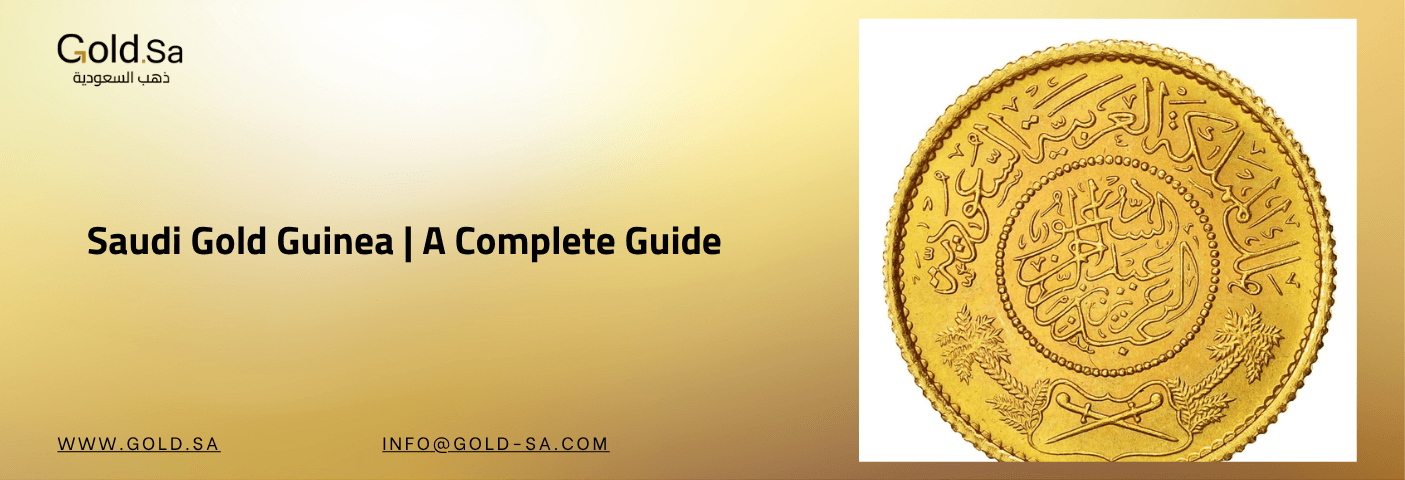
Saudi Gold Guinea | A Complete Guide
The Saudi Gold Guinea is not only a material value… but also a historical legacy that began in 1929.
Over the decades, this coin has remained a symbol of trust and savings in the Saudi and Gulf markets, thanks to its purity and ease of liquidity. If you are considering buying your first guinea, you are in the right place — here we will introduce you to the Saudi Gold Guinea, its karats and available weights, along with its advantages and disadvantages, how to calculate its price yourself, and golden tips for smart and profitable buying.
What Is the Saudi Gold Guinea?
The Saudi Gold Guinea is a coin made of pure gold in different karats (24K – 22K – 21K). Its most common weight is 8 grams, but other weights, such as 4 grams and 2 grams, are also available.
It is considered an ideal option for saving or long-term investment due to its value and liquidity in the Gulf market. Additionally, some women prefer wearing it as jewelry thanks to its distinctive design.
The coin is shaped like a golden circle, engraved with two palm trees and two crossed swords, along with the inscription, Kingdom of Saudi Arabia, and the name of its founder, King Abdulaziz bin Abdulrahman Al Saud.
1- What Are the Karats of the Saudi Gold Guinea?
The Saudi Gold Guinea is commonly available in 21K and 22K, with the 22K guinea being the most widespread. It consists of 91.6% pure gold. There is also a 24K gold guinea, which is the highest purity at 99.99%.
2- What Are the Weights of the Saudi Gold Guinea?
In the Saudi market, the guinea is available in three weights (8g – 4g – 2g):
- Full Guinea (8 grams): Diameter 23 mm, thickness 1.3 mm.
- Half Guinea (4 grams): Diameter 18 mm, thickness 1.1 mm.
Quarter Guinea (2 grams): Diameter 16 mm, thickness 0.9 mm.
3- What Are the Uses of the Saudi Gold Guinea?
The Saudi Gold Guinea is used for investment and savings in small amounts, making it an ideal option for portfolio diversification. Thanks to its high purity (99.9% – 91.3% – 87.5% raw gold) and historical value, it is trusted by investors.
It is also used in jewelry design, such as necklaces, bracelets, and rings, due to its small size and distinctive engravings — a feature admired by many Gulf women.
4- What Are the Advantages of the Saudi Gold Guinea?
The Saudi Gold Guinea is known for its purity and high quality, with an attractive design in Arabic calligraphy. Its small size (8 grams) makes it ideal for investors with limited budgets, saving them bank storage costs. It is also widely available across the Kingdom, such as at the Currency Museum, making buying and selling easier.
We can summarize the advantages as follows:
- High purity: Made of 24K, 22K, or 21K gold.
- Attractive design: Arabic engravings with a modern touch.
- Ideal weight: Suitable for small budgets and collectors.
- Easy storage: Compact size.
Local liquidity: Widely available in local markets such as Souq Al-Zal in Riyadh.
5- What Are the Disadvantages of the Saudi Gold Guinea?
The disadvantages of the gold guinea include its small weight (8 grams) and lower purity (91.6%) compared to bullion, which reduces its value. It is also difficult to divide (you cannot sell part of the coin, only the whole piece), and it carries a high premium, making liquidity slower. Additionally, it is affected by market fluctuations and does not generate monthly income, relying only on long-term appreciation.
Due to their high value, especially older pieces, counterfeit guineas have appeared. According to an NGS report in 2023, about 70% of guineas in the market were fake. Therefore, it is best to buy from trusted sources such as the Currency Museum in Riyadh or licensed heritage shops like Souq Al-Zal. Moreover, central banks such as the Saudi National Bank only purchase pure 24K coins, which lowers their relative liquidity.
We can summarize the disadvantages as follows:
- Limited weight: Not suitable for large investors.
- Hard to divide: Cannot be split for partial selling.
- No regular income: Does not generate periodic returns.
- Economic sensitivity: Price may change suddenly due to interest rates or USD fluctuations.
- Risk of counterfeiting: Requires expert verification.
- High premiums: The Price difference between buying and selling may reach 30%.
Resale difficulty: Especially for pieces without authenticity certificates.
How to Calculate the Price of the Saudi Gold Guinea
To calculate the price of the Saudi Gold Guinea, you first need to determine the current price of gold per gram in Saudi Arabia. Then multiply the gram price by the guinea’s weight, and finally add the making charges and other costs such as tax (if applicable).
Formula: Guinea Price = Gold Gram Price × Coin Weight + Making Charges + Historical Value
Example Calculation
Suppose the price of 24K gold per gram is 406.04 SAR, and the guinea weighs 8 grams.
- Calculate the pure gold value in the coin: 406.04 × 8 = 3,248.32 SAR
- Add historical value (depending on the coin’s condition, often around 10% for circulated guineas): 3,248.32 + 0.01 = 3,248.33 SAR
- Add making charges (paid only when buying a new coin, usually between 1%–3%): 3,248.33 × 0.02 = 64.69 SAR
Final price: 3,248.33 + 64.69 = 3,313.02 SAR
6 Golden Tips for Buying the Saudi Gold Guinea Smartly
To make your purchase of Saudi gold guineas profitable, you must first verify the coin's karat if it is old (the first 24K bar was produced by Pamp in 1979). Then, check the essential markings of the guinea — such as the minting year, the two palm trees, and the king’s name. Scrutinize the coin and avoid buying guineas with scratches, worn edges (which can reduce the value by up to 30%), or black rust, as these may indicate counterfeits.
It is best to follow prices from reliable platforms such as Gold.sa, and compare them with the seller’s price to avoid fraud. Finally, buy only from reputable places specializing in coins, such as the Currency Museum in Riyadh, and always request an invoice that confirms the guinea’s price, karat, and minting year. This protects your rights and makes resale easier later.
The Six Tips Summarized:
- Verify the true karat: Old Saudi guineas are only available in 22K or 21K, not 24K.
- Check the main markings: Look for the minting year stamp and official engravings.
- Inspect the coin physically: Avoid pieces with worn edges or scratches.
- Use trusted pricing sources: Compare prices across multiple reliable platforms.
- Buy from reputable sellers: Such as the Currency Museum or licensed heritage shops in Souq Al-Zal.
- Request an invoice: To secure your rights and simplify resale later.
Conclusion
The Saudi Gold Guinea remains a golden choice for long-term investment, especially with its historical value, unique design, and liquidity in the Gulf market. But success in acquiring guineas begins with smart buying and accurate knowledge of prices in real time.
Frequently Asked Questions (FAQs)
1- Do you lose money when selling a gold guinea?
Yes. When selling a gold guinea, you lose the entire making charge, in addition to deductions if the coin has scratches, which can reduce its value by more than 20%.
2- What is the best type of gold guinea?
The best type of guineas is the George English Guinea (21K), also known as the English Lira.
3- Which is better: the gold guinea or the gold bar?
The gold bar is better because it contains 99.9% pure gold without impurities such as lead or zinc, and it is exempt from any taxes in Saudi Arabia. The gold guinea, however, is often made of 21K gold to increase hardness and allow for engraving. Its production involves making charges and may include Value Added Tax (VAT), which adds extra costs for the buyer.
This educational material was produced in line with Gold.sa's digital publishing standards, to provide an accurate, accessible reference on gold for researchers and readers — without offering any investment guidance or financial advice to buy or sell assets.
Publishing Policy & Content Standards