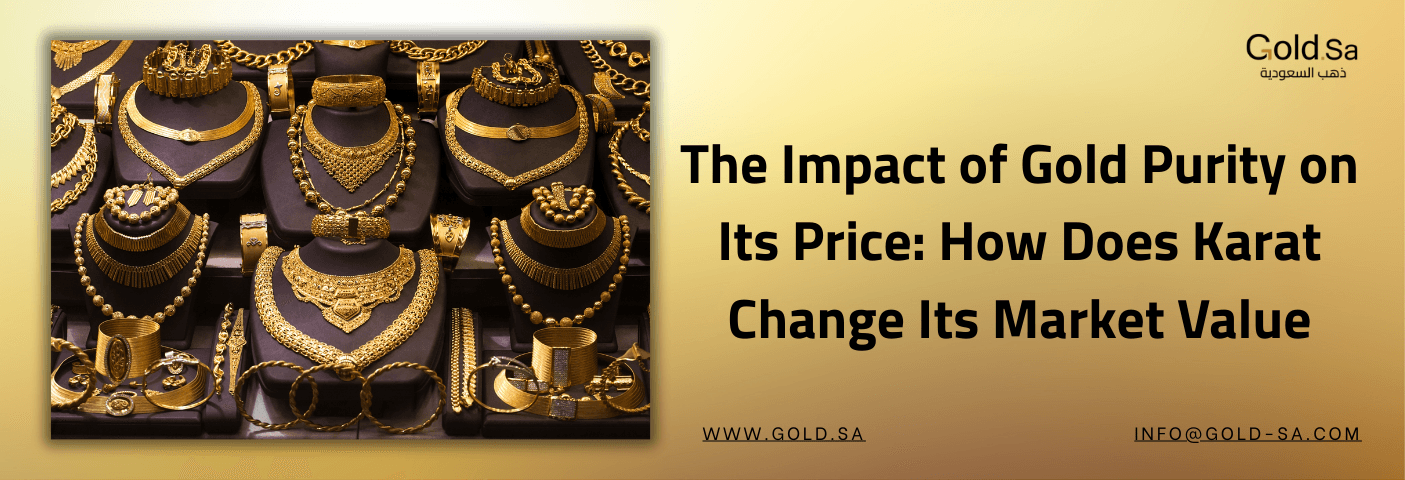
The Impact of Gold Purity on Its Price: How Does Karat Change Its Market Value?!
Did you know that two grams of gold may look the same… but one is worth thousands of riyals more than the other?
This is due to the impact of gold purity on its price. A difference of just a few percentage points of pure gold inside a bar can significantly raise its value. For example, a 22K gold bar (purity 91.7%) may cost more than a bar of the same weight in 21K (87.5% purity), simply because the purity is higher by 4%.
So purity is not just a number on paper—it is the hidden factor that determines the price of the piece, its appeal, and even its intended use. In this article from Gold.sa, we explore how karat drives gold prices in the Saudi and global markets, and why you might choose a piece with lower purity but greater practicality.
How Gold Purity Affects Its Price: What Experts Don’t Tell You!
Gold purity directly affects price. The higher the purity (karat), the greater the percentage of pure gold in the piece, and thus the higher the price per gram. For example, 24K gold is the highest and most sought-after for investment, containing 99.99% pure gold. Other karats, such as 22, 21, 18, and 14, are lower in price because they contain less pure gold mixed with other metals (copper, nickel, etc.), but they are stronger and more durable for daily use.
However, lower-purity gold (14K or 9K) can increase in value if it features high craftsmanship or includes gemstones. In other words, purity raises market value, but artistry and design can also add extra value.
Common Gold Karats and How Purity Affects Price and Use:
1- 24K gold: The purest form of gold at 99.99%, highest in price, containing no added metals. Used in coins and bullion, considered best for investment.
2- 22K gold: Purity 91.7% with 8.33% other metals (copper, silver), giving strength and durability. Ideal for luxury jewelry and long-term investment.
3- 21K gold: Purity 87.5% mixed with copper, silver, palladium (12.5%). Strong against wear, suitable for daily use, and moderately priced.
4- 18K gold: Contains 75% pure gold and 25% other metals (silver, copper, nickel). Harder and stronger, used in fine jewelry with detailed designs like earrings and rings.
5- 14K gold: Purity 58.3% with 41.7% copper and silver. Balances purity, strength, and affordability. Chosen for daily jewelry and distinctive pieces.
6- 9K gold: Purity 37.5% with 62.5% other metals (nickel, copper, zinc, silver). Lowest in price but strongest against scratches, suitable for everyday jewelry.
Comparison Table of Gold Karats
Gold Karat | Purity | Price | Uses |
24K | 99.99% gold, 0% other metals | Highest price | Long-term investment, bullion, coins |
22K | 91.7% gold, 8.33% other metals | High | Wedding sets, luxury jewelry |
21K | 87.5% gold, 12.5% other metals | Medium-high | Daily use, fine jewelry |
18K | 75% gold, 25% other metals | High | Rings, necklaces, bracelets |
14K | 58.3% gold, 41.7% other metals | Affordable | Daily jewelry, casual wear |
9K | 37.5% gold, 62.5% other metals | Lowest price | Every day rings, casual jewelry |
How to Test Gold Purity: 5 Methods of Verification
There are several methods to test the purity of gold, the most important of which are the acid test and the touchstone test, in addition to the magnet test for preliminary detection of non-gold metals. Advanced devices such as X-ray fluorescence (XRF) spectrometers can also be used, providing precise analysis of the composition and purity of gold.
These methods together provide a comprehensive examination that helps determine whether the gold is genuine and pure or counterfeit, protecting investors and buyers from fraud and ensuring the true value of jewelry or gold bullion.
1- Acid and touchstone test: Scratch the gold on a test stone, apply nitric acid, and observe the reaction. If the mark dissolves or changes color, it is not pure gold. If it remains, the piece is pure or mostly gold.
2- Electronic gold testing: Specialized devices measure gold content using electromagnetic waves or electrical resistance. Popular devices like Sigma analyze beneath the surface, while digital testers display karat and purity directly.
3- X-ray fluorescence (XRF): A professional, non-destructive method that exposes the sample to high-energy X-rays, causing atoms to emit secondary rays analyzed to identify elements precisely. Provides reliable data without damaging the piece.
4- Magnet test: Gold is non-magnetic. If jewelry is attracted to a strong magnet, it likely contains non-gold metals. This test alone is not conclusive.
5- Density test (water displacement method): Uses gold’s high density by comparing the weight to the displaced water volume. Matching results with known gold density indicates purity. Best performed by professionals for accuracy.
Motivational phrase on a golden background: Don’t buy and regret! Check today’s gold price and decide with confidence.
Now it’s time to decide: long-term investment or practical jewelry that lasts for years?
Remember, the choice is not only about taste or design but about the impact of gold purity on its price. Each degree of purity directly raises or lowers value, determining whether the right piece for you is a bullion bar for investment or an elegant ring for daily use. In short, understanding purity is the key to smart buying and profitable selling.
Frequently Asked Questions (FAQ)
1- How is gold purity measured?
Gold purity is measured in units called karats. Each karat represents one part out of 24 equal parts of pure gold in a bar. For example, 24K gold is pure gold, while 18K gold contains 18 parts pure gold and 6 parts other metals.
2- What is the difference between 21K and 22K gold?
The main difference between 21K and 22K is purity. 22K gold contains 91.7% pure gold and 8.33% other metals (silver, copper), while 21K gold contains 87.5% pure gold and 12.5% stronger metals like copper, silver, and palladium. This makes 21K more durable, while 22K retains higher purity and shine.
3- Which is better for investment, 21K or 18K gold?
21K gold is better for investment and saving due to its higher purity (87.5% pure gold) and higher market value compared to 18K gold, which contains 75% pure gold and 25% other metals. 18K is harder and more durable, making it more suitable for daily jewelry requiring detailed designs like bracelets and rings.
Read more about the difference between 21K and 18K gold!
This educational material was produced in line with Gold.sa's digital publishing standards, to provide an accurate, accessible reference on gold for researchers and readers — without offering any investment guidance or financial advice to buy or sell assets.
Publishing Policy & Content Standards