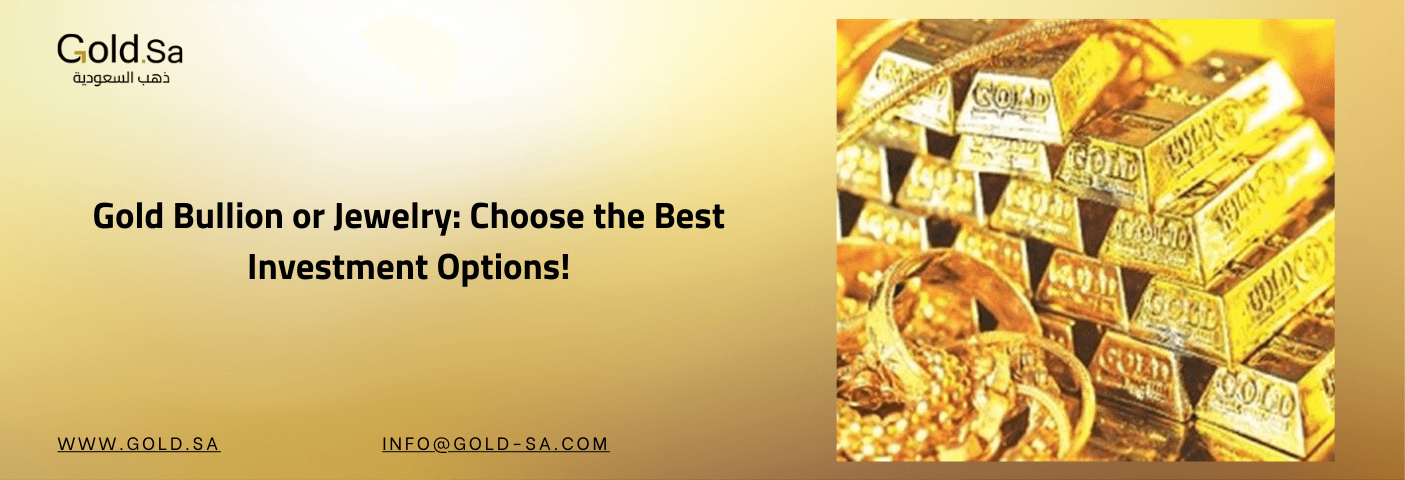
Which Is Better for Investment: Gold Bullion or Jewelry?
Gold is one of the oldest and most popular tools for saving and investing worldwide. It retains its value over time and serves as a safe haven during economic crises and financial volatility. With the variety of gold forms available in the market, a key question arises for both new and experienced investors: Is it better to invest in gold bullion or gold jewelry?
The choice between them does not depend only on taste or appearance, but on precise factors related to cost, liquidity, taxation, and purity. In this article, we will explore the fundamental differences between the two types and provide you with a comprehensive guide to help you make the best decision to protect and grow your wealth.
Which Is Better for Investment: Gold Bullion or Jewelry?
Without doubt, gold bullion is the superior investment choice due to its 99.9% purity, high liquidity, and tax exemptions in most countries such as Saudi Arabia. In addition, bullion has minimal or almost no manufacturing costs. On the other hand, gold jewelry remains the best option for adornment, but it carries several disadvantages as an investment tool.
Advantages of Gold Bullion Investment:
1- Quality and Purity: Bullion enjoys high purity levels up to 99.9%, making it the best for value preservation.
2- Global Liquidity: It is traded in organized markets through renowned exchanges such as the London Metal Exchange and the New York Exchange.
3- Tax Benefits: Bullion is exempt from taxes in major countries like Saudi Arabia and the UAE.
4- Manufacturing Efficiency: Produced by a limited number of trusted global refineries such as Argor-Heraeus, with almost no additional manufacturing costs.
Disadvantages of Gold Jewelry Investment:
1- High manufacturing costs ranging between 7–15% of total gold value.
2- Demand fluctuations depending on fashion trends and changing tastes.
3- Difficulty in valuation upon resale, especially for jewelry with embedded stones.
4- Lower liquidity compared to bullion, particularly if the design is not popular.
These features make gold bullion the ideal tool for safe, long-term investment, while gold jewelry remains more suitable for adornment and personal use rather than serious investment.
What Is the Difference Between Gold Bullion and Jewelry?
The main difference between gold bullion and gold jewelry lies in purity and usage. Jewelry is usually made from 18K, 21K, or 22K gold and is primarily used for adornment, gifts, or small-scale investment. Bullion, on the other hand, is raw gold—most often 24K (the highest purity)—and is mainly used for investment, savings, and wealth preservation.
Jewelry carries high manufacturing costs, which are lost upon resale, making it less favorable as an investment. Bullion has almost no manufacturing costs, and if any exist, they are minimal—making bullion the superior investment choice.
Key Differences in Table Form
Type of Gold | Karat | Main Purpose | Manufacturing Cost | Resale Loss | Best for Investment |
| Jewelry | 18K – 21K – 22K | Adornment, gifts, personal investment | High (up to 15% of raw gold value) | Deducted due to manufacturing | Not ideal |
| Bullion | 24K | Investment, wealth growth | Almost none | No loss, close to global market price | Highly recommended |
⧫ Have you compared today’s local gold prices with global rates?
You can track international prices directly with Gold.sa.
Are Gold Bullion the Best Way to Protect Your Money in 2025?
Investing in gold bullion is one of the safest and most trusted ways to protect wealth in 2025, especially during inflationary periods or financial market disruptions caused by wars or geopolitical tensions. Thanks to its 99.9% purity and effectiveness as a safe haven in times of crisis, bullion remains the preferred choice. A clear example is the rise of gold prices to $3,427.36 per ounce in June 2025 following the escalation between Iran and Israel, as investors turned to the yellow metal to safeguard their wealth.
Gold Bullion: Your Smart and Safe Investment
Gold bullion is a safe haven that preserves value during crises and provides ideal portfolio diversification due to its inverse correlation with markets. It is easy to sell and store, with tax exemptions in many countries such as Germany and the UAE, making it a practical choice for smart investors.
In short, gold is a tangible investment that ensures long-term security, protects against inflation, and offers flexibility in buying and selling—all in a single asset that preserves and grows your wealth.
Detailed Advantages of Gold Bullion:
1- Safe Haven Preserving Value: Gold has proven its ability to resist inflation waves and maintain value when other assets like real estate collapse due to wars or natural disasters. For example, during the global financial crisis, gold prices rose by 20% while currencies like the US dollar depreciated.
2- Ideal Portfolio Diversification: Experts recommend allocating 5–15% of your portfolio to bullion, alongside investments in mining companies such as Newmont, gold ETFs like IAU, real estate, bonds, or futures. This balance reduces financial losses since gold often moves inversely to stocks. For instance, during the European debt crisis, gold rose to $1,750 per ounce while stocks lost value.
3- Tangible and Reliable Asset: Physical gold can be inspected directly—checking hallmark, weight, karat, serial number, and production date. These details are stamped with high quality on bullion certified by global sources such as SAM or PAMP, ensuring credibility and trust among buyers.
4- Global Liquidity: Bullion is easy to trade and can be sold anytime through banks like Dubai Islamic Bank, licensed dealers, or major refineries such as VALCAMBI.
5- High Cost Efficiency: Bullion has very low or negligible manufacturing costs compared to jewelry, which can reach up to 15% of gold’s value.
6- Direct Ownership Without Risk: Bullion requires no intermediaries or third parties, unlike stocks or ETFs, and is free from credit risks compared to futures contracts.
7- Flexibility in Choice: Bullion comes in various sizes (from 1 gram to 1 kilogram) and shapes (rectangular, oval, round, structural), making it both an investment and aesthetic option.
8- Secure Storage Solutions: Small quantities can be stored at home in a secure safe, while large holdings can be stored in specialized banks offering 24/7 monitoring, such as the Federal Reserve Bank of New York.
9- Exceptional Tax Benefits: 24K gold bullion is exempt from taxes in many countries, including Europe, Saudi Arabia, and the UAE.
Before You Buy: Know the Disadvantages of Investing in Gold Bullion
Despite its appeal, investing in gold does not provide a fixed income for investors. Profits depend entirely on price appreciation over time. Investors also face challenges such as storage and insurance costs, and volatility in gold daily price that can negatively affect investment value.
Additionally, there are difficulties in resale, such as weak liquidity in some markets, differences between buying and selling prices, risks of counterfeit bullion, and potential capital gains taxes in countries like Canada and the United States.
Expanded List of Disadvantages:
1- No Fixed Income for Investors: Gold investment relies solely on price increases over time, without generating regular returns such as dividends from stocks or interest from bonds. This makes it unsuitable for those seeking a steady income.
2- Storage and Insurance Costs Increase Investment Expenses: Keeping bullion in secure vaults, especially in Swiss banks, involves annual fees of 1–2% of gold’s value, plus insurance costs ranging from 0.5% to 2% annually.
3- Short-Term Price Volatility: Although gold is stable long-term, it reacts suddenly to political and economic events. For example, in April 2024, gold price per ounce rose to $2,450 due to Middle East tensions, then dropped back to $2,300 in May.
4- Difficulty Selling Large Bullion When Needed: Large bars require time and effort to find suitable buyers and may sell below market price. In contrast, gold ETFs such as IAU and GLD provide instant liquidity and ease of sale.
5- Spread Between Buying and Selling Prices Reduces Net Profit: When buying bullion, investors pay premiums for manufacturing, transport, and dealer margins. Upon resale, deductions are made from the spot price, reducing final returns. In global exchanges like London and New York, these spreads are minimal (0.1–0.5%) due to high trading volumes.
6- Risk of Counterfeit and Fraud: Some bullion in the market may be fake or professionally coated, making detection difficult. It is recommended to buy from certified sources, such as LBMA, or perform simple home tests like magnet or acid checks.
7- Taxes on Gold Profits in Some Countries: In countries like Canada and the United States, capital gains taxes apply to gold profits. These taxes can reach 25% in the US and exceed 50% in Canada, significantly reducing net returns.
Best Strategies for Investing in Gold Bullion
Among the most effective strategies for investing in gold bullion are buying and holding for the long term to achieve capital growth and avoid market volatility. It is preferable to buy during price dips, such as in June and July, or after seasonal demand.
Diversify your portfolio between physical gold, mining stocks, gold ETFs, and digital gold to reduce risks, while also distributing investments across different bullion sizes for flexible buying and selling.
Most importantly, choose trusted suppliers and apply a regular dollar-cost averaging strategy, buying at fixed intervals regardless of price to secure a favorable long-term average cost.
These methods significantly reduce risks and enhance the safety of your investment. Let’s expand on the key ideas:
1- Buy and Hold Strategy: Purchase gold and hold it for long periods without selling. This protects and grows capital through market fluctuations. Example: During the 2008 financial crisis, gold rose by 25%.
2- Buy During Seasonal Price Dips: The best times to buy bullion are in June–July, when Indian demand declines, and after holidays in the Arab world, such as post-Eid al-Fitr.
3- Diversify Your Investment Portfolio: Diversification balances liquidity and safety. Experts recommend allocating 5–15% of your portfolio to gold, buying mining stocks such as Newmont Corporation, dedicating 30% to gold ETFs, and 20% to digital gold like PAXG. This balance reduces risk since gold often moves inversely to stocks.
4- Diversify Bullion Sizes: Invest in bullion of various sizes (from 1 gram to 1 kilogram). Larger bars (e.g., 500g) reduce per-gram costs, while smaller bars (e.g., 10g) are easier to trade.
5- Choose Trusted Suppliers: Buy gold from reputable dealers or certified refineries such as PAMP and Valcambi, or specialized online platforms like Al-Saab Jewelry.
6- Regular Investment (Dollar-Cost Averaging): Follow the average-cost method by buying fixed amounts of gold weekly or monthly regardless of price. This strategy smooths out volatility and ensures a favorable long-term average.
Is Gold Jewelry a Smart Investment? Discover the Pros and Cons Before Buying!
Gold jewelry is a popular investment choice in many cultures, especially in Arab and Indian societies, as it combines both aesthetic and financial value. While financial experts often prefer gold bullion as a more efficient investment tool, jewelry still holds a special place in investment portfolios, with advantages and disadvantages worth careful consideration before purchase.
Advantages of Investing in Gold Jewelry: High Value and Striking Beauty!
Gold jewelry combines beauty with financial value. It can be worn daily or on special occasions while retaining value during crises—especially if designs are simple, reducing manufacturing costs. Demand is high in emerging markets, making it easy to sell or exchange. Jewelry is also easy to store and transport, and in some countries, such as Saudi Arabia and the UAE, it is exempt from taxes, increasing its investment appeal.
Expanded Benefits:
1- Financial investment + adornment: Jewelry offers dual value—wearable beauty and financial security during economic crises.
⧫ Investment Tip: Buy simple designs, as lower manufacturing costs preserve more value.
2- High liquidity in emerging markets: Jewelry is in constant demand, especially in the Middle East and India. According to the World Gold Council (2023), India consumes 600–700 tons of gold annually, 50% of which is jewelry.
3- Easy access and storage: Small quantities can be stored at home safes and transported easily.
4- Exchange flexibility: Old pieces can be swapped for new ones by paying the weight and design difference.
5- Tax exemptions in some countries: Saudi Arabia and the UAE do not impose taxes on jewelry purchases.
Disadvantages of Investing in Gold Jewelry
Jewelry’s main drawback is high manufacturing costs, which may reach 20%+ of the piece’s value and are not recovered upon resale. Valuation is complex, especially for gem-studded pieces, making resale harder compared to bullion. Jewelry does not generate regular returns, may lose weight or value over time, and faces risks of damage, theft, or taxation in countries like Canada.
Expanded Drawbacks:
1- High manufacturing costs: Gold jewelry often carries manufacturing costs ranging between 10–25% of the gold’s value, and these charges are deducted upon resale, which negatively impacts the overall investment return.
⧫ In India, costs can reach 35% for complex designs. In Saudi Arabia, a simple ring may carry SAR 250 in manufacturing fees.
2- Difficulty in accurate valuation: Gem-studded jewelry requires expert evaluation to determine the raw gold weight.
3- Partial loss upon resale: Manufacturing costs are not recovered, and outdated designs lose value.
⧫ Tip: Thick chains and simple bracelets lose less (manufacturing ~15%).
4- No regular income: Jewelry depends solely on price appreciation, unlike stocks or bonds.
5- Risk of damage or theft: Jewelry may lose 5–15% of its weight over time and is more expensive to insure than bullion (3–5x higher).
6- Tax challenges: Some countries impose sales tax (Europe ~20%) and income tax (India ~3%) on jewelry investments.
Strategies for Investing in Gold Jewelry
If you want the best returns from jewelry, buy during recessions and sell during peak seasons to achieve seasonal profits up to 10%. Always choose 21K or 24K pieces with simple designs from trusted sources. Limit jewelry to 10–20% of your portfolio alongside other assets for balance.
Practical Strategies:
1- Buy during low-price seasons, sell during peaks: Buy in January/June, sell during Ramadan, weddings, or festivals. Seasonal price differences can yield 5–10% extra profit.
2- Focus on 21K–24K purity: Higher purity retains more value and reduces resale losses.
3- Choose simple designs: Classic bracelets or Italian chains retain 85–90% of value upon resale.
4- Buy from trusted brands: Jewelry from DAMAS or CARTIER resells more easily, losing only 15–20% of value, compared to 30–50% for unknown brands.
5- Diversify portfolio: Limit jewelry to 10% of investments, balancing with bullion, stocks, or real estate.
6- Use jewelry for both adornment and savings: Simple 21K bracelets or chains combine beauty with lower manufacturing costs.
7- Buy from tax-free markets: Countries like Saudi Arabia, the UAE, and Germany exempt jewelry from taxes.
Factors Influencing the Choice of Gold Type for Investment
The most important factors directly affecting the choice of the right gold asset for investment are clarity of investment goals, since tools differ depending on whether you aim for hedging or quick profits.
Other key factors include the size of your available budget, your readiness to bear storage costs, and choosing more liquid investment tools depending on your planned investment duration, such as gold ETFs.
Main Factors to Consider:
1- Investment Goals: If your goal is hedging against inflation and economic volatility, gold bullion or ETFs are the best options, as they preserve value long-term. But If you aim for short-term profits from price fluctuations, futures contracts or mining stocks may be more suitable.
2- Budget: Your financial capacity determines the right project. Large bullion (1kg) requires significant capital, while smaller bullion (10g) is more affordable for limited budgets.
3- Investment Duration: For short-term investments (less than one year), ETFs like GLD or digital gold accounts such as PAXG provide high liquidity and fast transactions. While for long-term investors (5+ years), physical bullion stored in secure vaults offers better value preservation.
4- Economic Factors: Monitor market movements closely, as geopolitical tensions or interest rate changes directly impact gold prices.
5- Storage and Insurance: Specialized banks such as the Bank of England charge storage fees that may exceed 5% annually of the stored gold’s value, which can affect net returns.
Golden Tips to Maximize Gold Investment Returns
The secret to maximizing profits from gold investment is to buy large, certified bullion from trusted global refineries such as PAMP, monitor prices carefully for optimal timing, and make gold part of a diversified portfolio (5–15%). Use a regular purchase strategy to avoid market volatility.
Expanded Tips:
1- Choose the right bullion weight: Larger bars (100g+) reduce buy-sell spreads and resale losses.
2- Verify certification and source: Buy bullion from globally recognized refineries like VALCAMBI or PERTH MINT with official hallmark, serial number, and certificate of authenticity.
3- Track gold prices daily: Stay updated with reliable sources such as Gold.sa.
4- Diversify your portfolio: Allocate 5–15% to gold, alongside stocks, real estate, and bonds for stability.
5- Adopt a regular purchase strategy (Dollar-Cost Averaging): Buy fixed amounts weekly or monthly regardless of price to spread risk long-term.
Conclusion
Ultimately, your choice between gold bullion and jewelry depends on your primary goal. If you seek adornment with value, jewelry may suit you. But if your focus is on efficient, low-cost, protective investment, bullion is the exclusive choice.
Remember: Successful investors start with accurate information and the right timing. Track live gold prices instantly via Gold.sa—a trusted source offering direct global rates—so you can decide precisely when to buy and when to sell.
Frequently Asked Questions (FAQ)
1- What is Gold Bullion?
Gold bullion is a block of raw gold (99.9% pure), available in the form of bars and plates. They come in various sizes, ranging from 1 gram up to 1 kilogram, and are primarily used for investment and wealth growth.
2- What Is Gold Jewelry?
Gold jewelry refers to gold that has been shaped and crafted into ornaments and decorative pieces such as earrings and chains. It is usually available in 18K and 24K, where other metals like silver are added to raw gold to provide durability.
3- What Are the Best Types of Gold Bullion in Saudi Arabia?
The best bullion in Saudi Arabia is 24K bars with 99.9% purity, as they are the highest in quality compared to lower karats, such as 18K. They offer strong liquidity, high value, and serve as a safe haven during crises, making them the preferred choice for wealthy investors.
This educational material was produced in line with Gold.sa's digital publishing standards, to provide an accurate, accessible reference on gold for researchers and readers — without offering any investment guidance or financial advice to buy or sell assets.
Publishing Policy & Content Standards