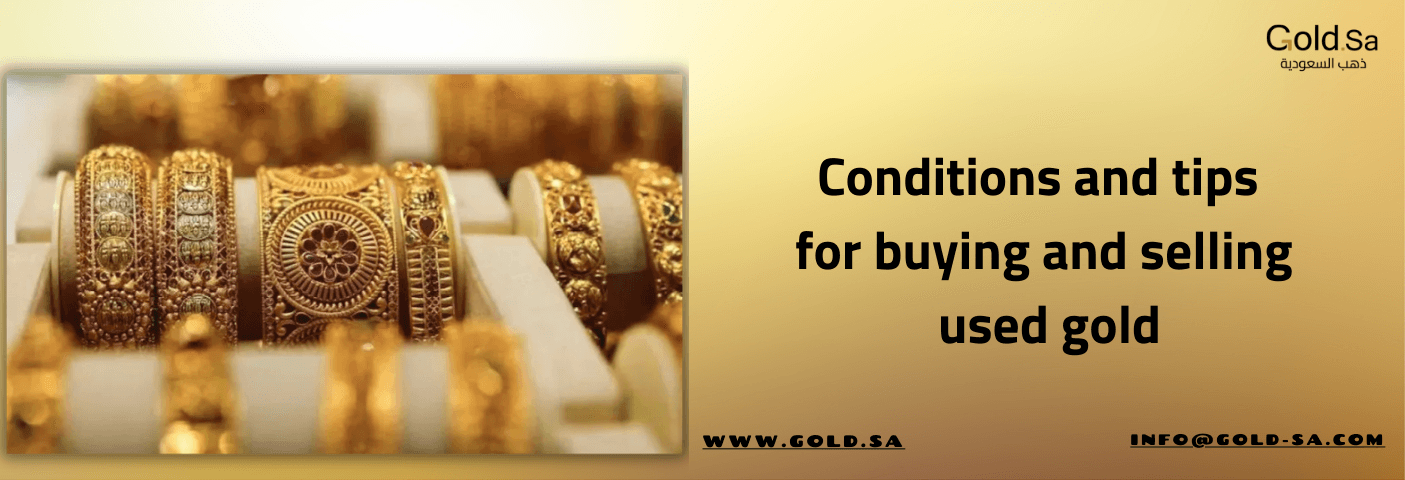
Conditions and tips for buying and selling used gold
Have you ever felt afraid of wasting thousands of dirhams when buying or selling used gold?
Imagine being able to use your basic knowledge today to turn every gram into guaranteed profit—without the hassle of decoding complex standards or falling into the trap of inflated prices.
In this practical guide, you’ll discover the secrets to choosing a trustworthy dealer, verifying karat with precise testing, and ensuring the highest value for your gold piece—step by step—with a professional approach that boosts your confidence and protects your wallet from unpleasant surprises.
Conditions and Tips for Buying and Selling Used Gold
Ensuring safety and achieving the best price when buying or selling used gold requires following specific conditions and tips. You must check the weight, karat, and hallmark on the piece, compare its price with the current market rate, choose a certified and trusted shop, and always obtain an official invoice or proof of ownership before completing the transaction.
Observing these rules protects both buyer and seller and prevents costly mistakes. For a safe and reliable experience in buying and selling used gold, here are the most important practical conditions and tips to follow:
1- Choose a trusted dealer
2- Check the karat
3- Check the weight
4- Check the overall condition of the piece
5- Compare the price with the local market
6- Calculate tax if applicable
7- Do not rely on craftsmanship costs in resale
8- Calculate zakat if the piece is for saving
Following these guidelines increases your chances of getting the best value for gold and provides legal protection for both parties. It is always recommended to deal with well-known gold shops or established brands such as L’azurde and Damas, since the reputation of the dealer and brand directly affects trust in the transaction.
Additionally, knowing both global and local gold prices—through platforms like Gold.sa or official central bank websites—helps you estimate the fair value of the piece and avoid exploitation or unjustified overpricing.
1- Choose a trusted dealer
The seller or dealer must have a good reputation and proven track record. This ensures fair pricing and guaranteed quality. It is advised to rely on shops under government or trade association supervision, as they usually adhere to market prices and tax regulations. Dealing with a trusted shop reduces risks of fraud and provides guarantees. For example, in Egypt, the Gold Division Secretary recommends choosing a dealer of trust, since reputable dealers follow clear rules in evaluation and payment.
2- Check the karat
Always verify the hallmark stamped on the gold piece, such as “21K” or “18K.” This indicates the purity percentage. The higher the karat, the more pure gold the piece contains, and the higher its value. If the hallmark is unclear or missing, beware—it may indicate falsification. Use precise scales, technical tools, or certified labs to confirm that the hallmark matches the actual purity before purchase.
3- Check the weight
Before buying or selling, measure the piece accurately in grams using a precise scale. Price is based mainly on weight and karat. Every extra gram increases the value. Weigh the piece in front of the seller or an authorized agent to ensure fairness. Remember, even decorated or stone-set pieces (like rings with gems) are priced based on the gold weight only, while gemstones may be valued separately depending on type.
4- Check the overall condition
Inspect the used piece carefully for deep scratches, wear, or discoloration. Pieces in good condition retain higher value, while damaged ones may be discounted. Check for cracks or stains and whether polishing or remelting is needed. The better the condition, the higher the resale price or the lower the purchase cost.
5- Compare the price with the local market
Before buying or selling, compare the offered price with local and global market rates. You can check current gold prices in countries like Saudi Arabia or the UAE through updated websites or reliable banking sources. It is recommended to review global exchanges or specialized sites like Gold.sa to know the price per ounce or gram in USD or SAR, then convert to your local currency. This allows confident negotiation and ensures you don’t overpay. Experts also highlight the importance of monitoring foreign exchange rates if buying in non-local currencies, as this affects gold pricing.
6- Calculate tax if applicable
Check if taxes apply to your transaction under local laws.In Saudi Arabia, a 15% VAT applies to gold jewelry below 99% purity, while 24K gold or investment bullion (≥99% purity) is exempt.
In the United Arab Emirates, a 5% value-added tax (VAT) is applied to gold jewelry. Therefore, when buying or selling either new or used gold, this tax must be included in the final transaction price.
Taxes increase the buyer’s total cost and reduce the seller’s net return, so planning for them is essential before the deal.
7- Do not rely on craftsmanship costs in resale
When buying new gold, you pay crafting fees (manufacturing cost) once. But in resale, these fees are not part of the gold’s value. Dealers deduct craftsmanship costs when buying used pieces since they were already recovered from previous buyers. Therefore, don’t expect to reclaim craftsmanship fees when reselling—negotiate based only on the pure gold value.
8- Calculate zakat if the piece is for saving
If you keep gold pieces for saving or investment, you must calculate zakat. The nisab threshold is 85 grams of pure 24K gold. If your holdings reach or exceed this and remain for a full Hijri year, zakat of 2.5% must be paid. If the gold is worn regularly for adornment and not intended for saving, some schools of Islamic jurisprudence exempt it. However, reserve or investment gold requires zakat once conditions are met. Calculating zakat ensures compliance with Islamic financial obligations, especially in countries like Saudi Arabia and the UAE, where residents value adherence to Sharia law.
Common Mistakes to Avoid When Buying and Selling Used Gold
Many people make costly mistakes when dealing with used gold transactions, such as relying only on personal judgment, completing deals without documentation, or ignoring hallmark and purity certificates.
These errors can lead to financial losses or legal issues. Here’s what you should avoid:
1- Relying on intuition instead of technical inspection: Do not depend solely on your own view of the piece or the dealer’s estimate. Always consult a certified expert or official lab to verify karat and condition.
2- Conducting cash transactions without official documents: Never skip documentation. A formal invoice protects you legally and secures your rights in case of defects or disputes.
3- Ignoring warranty or purity certificates: Always check the karat or purity certificate if available. Neglecting this step may cost you later.
4- Overlooking fine details due to a “tempting price”: Do not be deceived by low prices if specifications are unclear. Suspicious offers may hide issues with karat or hallmark forgery.
? Expert Tip: Don’t treat used gold as a simple commodity but as a sensitive financial asset. It requires careful verification and clear documentation, just like any long-term investment.
Conclusion
The secret to securing the best deal in used gold trading lies in strictly following these conditions and tips. By knowing the weight and karat, checking the condition, and comparing with current market prices, you avoid risks and secure fair value.
Choosing a trusted dealer and obtaining certified documents strengthens your rights. Remember not to count craftsmanship costs in resale, and always consider zakat if you are investing in gold.
FAQs
1- How do I correctly calculate zakat on used gold?
If you keep gold for saving or investment, calculate zakat at 2.5% of the pure gold weight after one full Hijri year, provided it reaches the nisab (85 grams of 24K gold). Always verify the actual weight and karat before calculating.
2- Can used gold be sold without an official invoice?
Selling to shops usually requires an invoice or proof of ownership to ensure source legitimacy. Private sales between individuals may occur without invoices, but it is strongly advised to have written proof (like a small contract or receipt) to protect both parties.
3- What are the common types of gold by country?
- Emirati gold: Often 21K, 22K, or 24K, known for modern designs, popular in the Gulf.
- Saudi gold: High purity (22–24K), traditional or Gulf-style designs, favored for saving.
- Indian gold: Usually 22K, heavy ornate designs, often with gemstones or colorful decorations.
- Turkish gold: Combines heritage and modernity, mostly 21K–22K, famous for shiny, intricate designs.
- Bahraini & Kuwaiti gold: Warm or light golden color, typically 21K–22K, with traditional detailing.
- Swiss gold: Among the purest globally (often 24K), widely used in internationally certified bullion bars.
This educational material was produced in line with Gold.sa's digital publishing standards, to provide an accurate, accessible reference on gold for researchers and readers — without offering any investment guidance or financial advice to buy or sell assets.
Publishing Policy & Content Standards