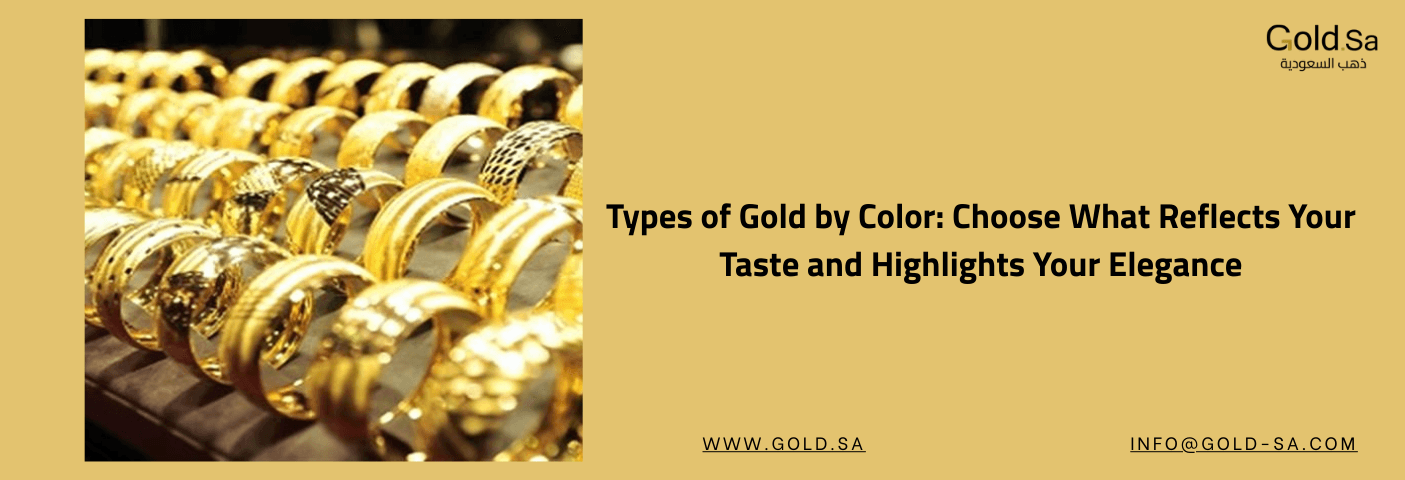
Types of Gold by Color: Choose What Reflects Your Taste and Highlights Your Elegance
Do you think gold comes in only one color? Think again.
In the world of jewelry, gold is not measured only by karat but also by its shades of color, which carry your personal style and reflect your identity. While some choose traditional yellow gold out of habit, others lean toward modern white or romantic rose, without realizing that each color has unique properties that affect the look, value, and daily use of the piece.
With the variety of colors and options, choosing the right shade can be confusing. So how do you know which color suits you best?
In this article, you will clearly discover the types of gold traded by color, what distinguishes each in terms of composition, durability, uses, and harmony with skin tone and occasions.
Types of Gold by Color
Gold comes in several colors and forms, depending on the metals added to it and the alloy composition. Not all are pure gold. The main colors include yellow (traditional), white (modern), rose (romantic), green (rare), gray (refined), and black (bold).
Each color has distinctive properties in terms of purity, alloy composition, and common uses. Below, we explore each in detail.
1- Yellow Gold: The Classic Choice That Never Fails
Yellow gold is the traditional and most common form in jewelry, characterized by its warm, shiny tone that embodies the beauty of the natural metal in its purest form.
Its alloy usually consists of pure gold with up to 99.9% purity (24-karat gold), mixed with metals such as copper and silver to enhance strength, especially when reduced to 22 or 18-karat gold. At 18-karat, added metals can reach 25%, making the piece more durable for daily use while retaining its luxurious appearance.
Yellow gold is widely used in traditional jewelry such as rings, bracelets, and necklaces, preferred for its timeless classic appeal. It is ideal for both formal and everyday occasions, as it retains its natural color without the need for plating or extra treatment.
Expert tip: If you prefer a traditional style or have warm-toned skin, yellow gold is a safe and attractive choice. It rarely causes allergies and is considered a reliable option for long-term investment.
2- White Gold: Contemporary Elegance in a Refined Shade
White gold is known for its shiny silver-like appearance, giving it a modern and elegant character. It is one of the most popular choices in contemporary jewelry. This type of gold is made by mixing pure yellow gold with white metals such as nickel, palladium, or silver, which give it its distinctive light tone. It is often coated with a rhodium layer for extra brilliance and a smooth finish.
White gold is usually available in 18 and 14-karat alloys, with pure gold making up about 75% or 58% of the alloy, while the rest consists of white metals to adjust color and increase strength.
It is widely used in engagement and wedding rings, as well as luxury jewelry that pairs beautifully with diamonds and clear gemstones, offering a refined look that matches modern taste.
Does white gold lose its color over time? Yes, the rhodium coating may fade gradually with friction or frequent use, revealing a slight yellowish tone of the original gold.
3- Rose Gold: For Those Who Love Subtle Uniqueness
Rose gold, with its warm and vibrant hue, is one of the most attractive colors in jewelry. It is created by mixing 75% pure gold (18-karat) with a large amount of copper, ranging between 22% and 25%, plus a small percentage of silver to adjust the shade.
The higher the copper content, the deeper and warmer the red tone. Silver adds a lighter pink touch and soft shine.
This unique blend gives rose gold good durability and an elegant look, making it a favorite for romantic jewelry designs such as engagement rings, wedding sets, and everyday pieces that add a soft, distinctive touch. Many choose it to break away from traditional colors and add warmth to their style.
4- Green Gold: For Those Seeking Rarity and Distinction
Green gold, sometimes called electrum, is one of the rarest and most unique colors in jewelry. It is made by mixing gold with light metals, primarily silver, and sometimes copper or zinc for strength. Cadmium was historically used to deepen the green tone, though it is now rare due to toxicity.
Silver gives the alloy a yellowish-green shade, while other metals add varying degrees of green. Though not produced as widely as other colors, green gold attracts designers and collectors of rare jewelry.
Historically, green gold was used in coin minting and temple decoration by ancient civilizations such as the Egyptians. Today, it is crafted into limited pieces like bracelets, luxury sets, and artistic jewelry for those seeking uniqueness.
5- Gray Gold: Silent Luxury and Subtle Elegance
Gray gold is a calm and refined color in jewelry, though relatively rare compared to more popular shades. It is characterized by its muted gray tone, reflecting understated elegance and modern design. This color is achieved by mixing pure gold with metals such as palladium, silver, copper, and sometimes manganese, in carefully measured proportions.
Some pieces are coated with rhodium to enhance shine without altering the gray tone. A common alloy is 18-karat gold containing about 75% pure gold, 15% silver, and precise amounts of palladium to achieve the final shade.
Gray gold is often used in modern wedding rings, slim bracelets, and refined accessories with minimalist designs, making it a preferred choice for those who appreciate subtle harmony over flashy colors.
Expert tip: If you love understated elegance and refined designs without exaggeration, gray gold is your perfect choice. Its rarity makes your taste stand out ahead of trends.
Comparison Table of Gold Colors
Color | Purity (Karat/%) | Added Metals | Main Uses |
Yellow Gold | Up to 24K (99.9%) | Copper and silver (higher strength) | Classic jewelry |
White Gold | 18 or 14K | Nickel, palladium, silver + rhodium plating | Modern engagement and wedding rings |
Rose Gold | 18K (75%) | Copper (22–25%) with some silver | Romantic jewelry, daily adornment |
Green Gold | 18K (75%) | Silver (sometimes copper or zinc) | Rare pieces, commemorative coins, and artistic jewelry |
Gray Gold | 18K (75%) | Silver (~15%), palladium, and some copper | Luxury designs, refined jewelry |
How to Choose the Right Gold Color for You
Your choice of gold color depends on several factors: personal taste and preferred design style, skin tone, the purpose of wearing, and current fashion trends. Balancing these factors helps you select the most suitable color.
1- Personal taste and style: Do you lean toward classic elegance or modern looks? Yellow gold suits warm traditional styles, white gold offers a contemporary touch, rose gold is the romantic option, while gray gold is subtle and refined.
2- Skin tone: Warm-toned skin (tan or dark) pairs best with warm colors like yellow and rose gold. Cool-toned skin (fair or pinkish) matches better with white and gray gold.
3- Purpose of wearing: For investment or formal occasions, traditional yellow gold is preferred as it retains value. For daily use, choose colors requiring less maintenance, such as yellow or rose gold.
4- Fashion trends: Styles change over time, but constants remain. Recently, rose and white gold have gained popularity in modern jewelry, while black and gray gold stand out in innovative designs.
Expert insight: Choose the color that aligns with fashion trends you admire and fits your personality without clashing with your overall style.
Choosing the right gold color combines personal taste with knowledge of each shade’s properties. Whether you prefer the classic warmth of yellow, the modern elegance of white, or the romantic charm of rose, each color has its own magic and uses. Try different pieces, evaluate them against your style and skin tone, and keep up with the latest trends.
For more information on updated prices of new and used gold, visit Gold.sa, where you can find live daily gold price data.
Frequently Asked Questions
1- Does rose gold fade over time?
Yes, rose gold may lose some of its pink shine over time due to copper oxidation. However, this fading is not permanent, as the original color can usually be restored with simple polishing. It is also more resistant to stains and dirt compared to pure silver.
2- Which gold color suits dark skin?
Experts show that warm gold colors usually suit tan or dark skin tones. Yellow and rose gold are the best options for these complexions.
3- What is the difference between white gold and silver?
The main difference is that white gold is an alloy of pure gold (usually 18 or 14-karat) mixed with white metals such as nickel or palladium, giving it a shiny silver-like appearance. Silver, especially sterling silver, is a separate metal composed of about 92.5% silver and 7.5% other metals.
This educational material was produced in line with Gold.sa's digital publishing standards, to provide an accurate, accessible reference on gold for researchers and readers — without offering any investment guidance or financial advice to buy or sell assets.
Publishing Policy & Content Standards