Difference Between 24K and 18K Gold: Which Is Better to Buy?
Gold is one of the most captivating and timeless precious metals, often chosen to mark life’s most cherished moments. But what truly defines the value and beauty of every gold piece is its karat rating, a measure of purity that sets 24K and 18K gold apart as two of the most popular types in the market.
While both are widely recognized, they differ significantly in purity, durability, color, and price, making each ideal for different purposes. Whether you're seeking a safe haven investment or a heart-stealing piece of jewelry, understanding the contrast between pure 24K gold and alloyed 18K gold is essential.
In this article, we’ll break down the key differences between 18K and 24K gold, helping you make a smart, secure purchase that aligns with your style and financial goals.
What’s the Difference Between 24K and 18K Gold?
The main difference between 18-karat gold and 24-karat gold lies in their purity level.
18K gold contains 75% pure gold and 25% other metals such as copper, silver, or zinc.
24K gold is known as pure gold, with a purity level of 99.9% and no added metals.
Its high gold content gives it a higher monetary value and a bright yellow color, but it is also softer, making it the ideal choice for investment.
As for 18K gold, the added metals give it high durability, making it suitable for crafting beautiful jewelry in various colors.
Here’s a table showing the most common differences between the two karats to help you choose the right gold piece:
| Karat | Gold 18K | Gold 24K |
| Purity | 75% | 99.9% |
| Added Metal Ratio | 25% | 0% |
| Color | Dark yellow | Light, pure yellow |
| Hardness | Strong and durable | Very soft |
| Usage | All types of gold jewelry | Bullion – Gold coins |
| Price | Relatively affordable | Much more expensive |
| Investment Value | Relatively low | Very high |
| Karat Stamp | Stamped 750 or 18K | Stamped 999 or 24K |
1– Which Is Purer: 18K or 24K Gold?
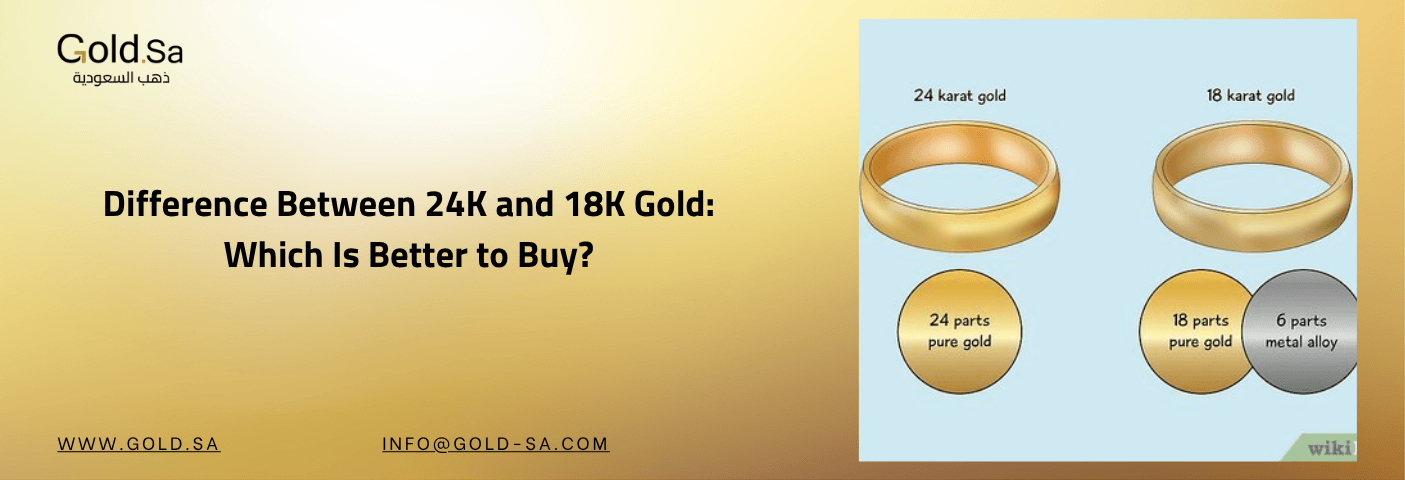
24K gold is the purest form of gold, containing 99.9% pure gold with no impurities or added metals. In comparison, 18K gold has a lower purity level, consisting of 75% pure gold and 25% other metals such as copper, silver, or zinc.
In other words:
24K gold is made of 24 parts gold out of 24, which is why it’s called pure gold.
18K gold is made of 18 parts gold out of 24, plus 6 parts of other metals, which is why it’s known as mixed or alloyed gold.
2– Color Difference Between 18K and 24K Gold: Which Gold Tone Suits Your Skin?
18K gold is known for its slightly darker yellow hue with an elegant shine, making it appear more refined in jewelry compared to 24K gold, which has a bright, intense yellow color and strong luster, but is less suitable for jewelry due to its softness.
The added metals in 18K gold jewelry not only enhance its durability but also allow for a wider range of sophisticated colors, enabling designs that match various tastes and highlight the beauty of the wearer.
Choosing the right gold tone for your skin is just as important as selecting the karat or design, as it adds an extra touch of elegance to your overall look. Here are the basic guidelines:
1- Cool skin tones: Best paired with white gold or rose gold, which add a refined glow.
2- Warm skin tones: Look stunning with classic yellow gold, which enhances their natural warmth and radiance.
3- Neutral skin tones: Lucky ones, they can wear all gold colors beautifully, offering maximum flexibility in style.
3– Why Is 18K Gold Stronger Than 24K Gold?
18K gold is more durable than 24K gold because it contains a blend of metals such as copper, zinc, silver, or cadmium, which are added to the naturally soft pure gold. These elements give it greater hardness, better malleability, and higher resistance to scratches and breakage.
In contrast, 999 gold bars, made of 99.9% pure gold, are much softer and more prone to deformation, making them susceptible to bending under pressure or impact.
4– Is 24K Gold the Best? Discover Its Uses and Why It’s Avoided in Jewelry
24K gold is used in the production of bullion and gold coins, and is also crafted into luxury gifts. Occasionally, it’s utilized in certain electronic components due to being the most expensive and purest of all gold types, with a purity level of 99.9%. This makes it a top choice in the following areas:
1- Investment: Bullion and gold coins made from pure metal are an ideal option for long-term wealth preservation, as they retain their value in global markets.
2- Luxury gifts and artistic pieces: Used in crafting unique items such as watches or premium artwork, often intended for display due to its softness and high susceptibility to scratches.
3- Technical and medical applications: Known for excellent electrical conductivity and high resistance to corrosion, making it suitable for certain specialized devices.
Despite its appeal in terms of purity and value, its soft nature makes it impractical for everyday jewelry, as it cannot withstand pressure or impact. Additionally, it is more expensive compared to other karats.
5– 18K Gold: The Global Favorite for Everyday Jewelry
18K gold is the most suitable choice for daily-wear jewelry, as it combines durability, color variety, and affordable pricing. Its unique advantages include:
1- Strong and corrosion-resistant, due to the presence of metals like silver, copper, or zinc.
2- Available in multiple colors: In addition to classic yellow, it comes in elegant shades such as rose, white, green, purple, and blue.
3- Lower cost compared to higher karats, making it a stylish and economical option.
6– Why Is There a Price Difference Between 18K and 24K Gold? Which Is More Expensive?
24K gold is more expensive by approximately 25% to 30% compared to 18K gold, due to its 99.9% pure gold content, versus only 75% in 18K. This higher purity significantly increases its price.
The actual price difference between 18K and 24K gold varies depending on global gold rates, crafting fees, and country-specific factors, but generally, the price of 24K gold per gram in Saudi Arabia is higher than price of 18K gold for the same weight.
7– Invest Smart: Best Gold Type to Buy in 2025 – 18K vs 24K
24K gold is the best investment choice in 2025 due to its 99.9% purity and ease of resale, as it’s recognized in all global gold exchanges. Meanwhile, 18K gold is primarily used in jewelry manufacturing and is not considered an investment-grade option, since it contains only 75% pure gold with added metals.
Here’s a table showing the key differences:
| Criteria | 18K Gold | 24K Gold |
| Purity | 75% | 99.9% |
| Monetary Value | Value of pure gold only | Retains full value |
| Manufacturing Cost | High (not counted when reselling) | Minimal |
| Ease of Resale | Hard to sell as investment | Highly liquid |
| Risk of Loss | High | Low |
| Storage | Requires a secure vault | Can be worn |
| Popular Form | Jewelry | Bullion and gold coins |
Therefore, 24K gold items are the top choice for investment. But beware of fraud—always check the karat stamp and buy from trusted sources.
8– How to Identify Gold Karat? The Stamp Difference Between 18K and 24K
You can identify the gold karat by checking the number stamped on the gold piece.
18K gold jewelry carries the stamp 750, meaning it contains 75% pure gold.
24K gold bullion carries the stamp 999, indicating it consists of 99.9% pure gold.
This number is called the karat stamp, a global standard that defines the percentage of pure gold in any item and helps distinguish between different karats easily.
Are You Buying Real Gold? Discover the Difference Between Genuine and Fake Gold in This Table
The difference between genuine gold and fake gold lies in the stamp, weight, color, and price. Real gold carries a clear stamp that matches its karat, has a relatively heavy weight, and a uniform, shiny color. Fake gold often lacks a stamp or has a forged one of poor quality, with a dull color and light weight compared to its size.
Here’s a simplified comparison table showing the key differences:
| Feature | Genuine Gold | Fake Gold |
| Stamp | Clear and matches the karat | Missing or forged |
| Stamp Location | On hidden parts of jewelry; on flat face of bullion | In unusual spot, poorly engraved |
| Weight | Heavy | Light |
| Color | Uniform and shiny | Dull |
| Price | Matches market value | At least 20% cheaper |
Conclusion
All that glitters is gold, but each karat has its own character and advantages. Your ideal choice depends on your purpose for buying gold: If you're looking to grow or preserve your wealth, 24K gold is the smartest investment. But if your goal is to gift a stylish, modern piece with an eye-catching color, then 18K gold is the perfect pick!
The first step is always knowing the price, Follow Gold.sa now to stay updated with live prices of both new and used gold!
FAQ
1– What’s the difference between a gold bar and a gold coin?
Gold bars derive their value solely from weight and are the top choice for investors / gold = 99.9% / Gold coins are favored by collectors for their artistic and historical value / gold = 90–99.9% /
2– When is the best time to buy gold?
The best time to buy gold is when its global price drops, usually after festive seasons (Eid al-Fitr, Eid al-Adha, Ramadan), and during periods of dollar strength when investors diversify into other assets like real estate and stocks, reducing demand for gold and lowering its price.
3– Which type of gold doesn’t lose value when sold?
The type of gold that doesn’t lose value when sold is 24K gold, due to its 99.9% pure gold content.
4– Is white gold cheaper than yellow gold?
White gold is not necessarily cheaper than yellow gold, as their price depends on the same factors (karat, weight, craftsmanship).
5– How can I sell gold without losing money?
To sell gold without loss, buy from a trusted source to avoid fraud, and choose pieces with simple designs to reduce manufacturing costs.
This educational material was produced in line with Gold.sa's digital publishing standards, to provide an accurate, accessible reference on gold for researchers and readers — without offering any investment guidance or financial advice to buy or sell assets.
Publishing Policy & Content Standards