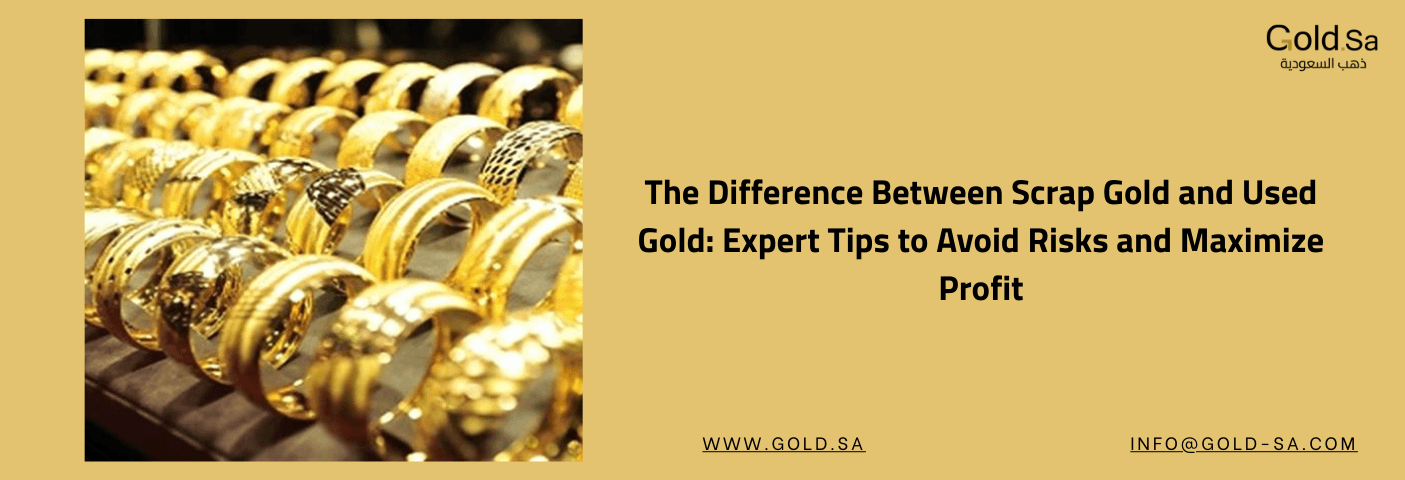
The Difference Between Scrap Gold and Used Gold: Expert Tips to Avoid Risks and Maximize Profit
Do you want to invest your savings in gold and are searching for the best option between pieces ready for adornment and those purchased in their raw state without preparation?
Within this glittering world, two main categories serve different goals: used gold and scrap gold. In this article, we will quickly outline the key differences between them, then explain each point in depth with real examples to help you make the best decision.
The Difference Between Scrap Gold and Used Gold
The difference between used gold and scrap gold lies in the condition of the piece, the purpose of purchase, and the associated costs. Used gold refers to jewelry that has been previously worn or traded but remains in relatively good condition after light cleaning or polishing. It is a choice that combines adornment and investment without bearing the stamping tax on new pieces and with relatively low making charges.
Scrap gold, on the other hand, refers to pieces with damage, breaks, or fading. They are purchased in their current state based only on weight and karat, intended for value preservation or remelting to create bullion or new jewelry at minimal preparation cost. This difference is reflected in pricing: used gold is priced close to market value per gram with a small addition for cleaning or retailer margin, while scrap gold is priced almost at the prevailing market rate with only a symbolic margin to cover handling costs, without extra expenses for polishing or repair.
For example, a used gold necklace may be offered at a cost close to the market price per gram with a small cleaning fee, while a scrap piece of the same weight would be valued at the market price with only a minimal margin for the dealer.
Thus, those seeking a wearable piece that can also benefit from price appreciation without high costs prefer used gold, while investors aiming to preserve value at the lowest preparation cost or artisans looking to melt the metal find scrap gold more suitable.
Here Are the Key Differences Between Used Gold and Scrap Gold That We Will Explain in Detail:
1- Difference in Definition
Used gold refers to jewelry that has been previously worn or traded but still appears acceptable after light cleaning or polishing. It is resold as if it carries both the original design value and the intrinsic value of the metal.
Scrap gold refers to pieces showing damage, breaks, or discoloration to the extent that wearing them is impossible without remelting or aesthetic reworking. They are valued only for their intrinsic weight and karat, without regard to design or appearance.
For instance, a necklace with minor scratches removable by polishing is considered used, while a chain with a broken clasp or discoloration from long storage is classified as scrap, purchased only for the raw gold it contains.
2- Difference in Usage
Used gold serves dual purposes. It provides those seeking adornment with a ready-to-wear design after simple cleaning, while also offering investors the chance to benefit from gold’s price appreciation without paying high making charges or stamping taxes on new pieces.
Scrap gold remains primarily a choice for those focused on value preservation or remelting, whether for long-term investment or for creating bullion and new designs without spending on preparation for display or wear.
Thus, someone looking for a distinctive ring design would choose used gold, while an investor or artisan seeking raw material for storage or melting would opt for scrap gold.
3- Difference in Price and Making Charges
In both cases, the price is calculated mainly based on the piece’s weight and karat according to the prevailing market price per gram. The difference lies in making charges or additional costs related to the condition.
Used gold pricing includes a small amount reflecting cleaning or polishing costs to prepare the piece for resale or use, balancing design value with gold value.
Scrap gold is priced almost exactly at the market rate per gram, with only a symbolic addition covering inspection and risk, without cleaning or repair costs. This makes it cheaper upfront and more suitable for those who want to store value directly or remelt later.
For example, if the market price per gram is set at a certain value, a used necklace may be offered at a similar price with a small cleaning fee, while a scrap piece of the same weight would be valued almost exactly at the market price with only a minimal dealer margin.
Whether you choose used gold or scrap gold, understanding the fundamental differences gives you the power to achieve your goals—whether a ready-to-wear design with balanced investment potential, or raw metal that preserves value at the lowest possible cost. Define your purpose—adornment or pure savings—and benefit from your gold strategy with confidence.
Start today by making an informed decision, because knowledge is the key to achieving maximum returns with minimal expenses.
And don’t forget to track daily prices of used gold through Gold.sa to ensure you make the best decision at the right time.
Frequently Asked Questions (FAQ)
1- How can I verify the karat when buying used or scrap gold?
Check for a clear karat hallmark and test the piece using a karat measuring device or acid. It is best to consult an experienced expert to avoid fraud.
2- Does used gold lose value when resold?
It loses slightly compared to new gold, since making charges and cleaning costs are lower, reducing the gap between buying and selling prices when the market rises.
3- Should scrap gold be remelted immediately after purchase?
Not necessarily. You can keep scrap gold in its current state as a store of value, or remelt it later if you wish to turn it into bullion or new jewelry.
4- Where can I find trusted shops to buy used and scrap gold?
You can buy from licensed jewelers with a clear commercial record and good reputation in your area. Ask to see testing devices and invoices to ensure transparency.
5- Are there ideal times to buy gold?
Yes. Monitor global and local price fluctuations. Buying during a temporary dip in the local market that coincides with a global decline can be advantageous. Most importantly, buy from trusted sources in line with your goals and budget.
This educational material was produced in line with Gold.sa's digital publishing standards, to provide an accurate, accessible reference on gold for researchers and readers — without offering any investment guidance or financial advice to buy or sell assets.
Publishing Policy & Content Standards